

Transformation in the Lighting Industry: From Lighting Up the Night to Operating the Night
Seven or eight years ago, I worked at a lighting engineering company.
The boss was in his fifties, very capable, well-connected, and truly got things done.
His son was also very competent, following his father's orders precisely. Although I didn't interact much with him, one scene has stuck with me to this day.
It was after a lighting project was completed, and we went to check the lighting at night.
As we chatted, the topic turned to lamp theft.
He said:
"There are some thefts, but not many now. We have patrols at night, just waiting for project acceptance."
I casually asked:
"What if someone steals lamps after acceptance?"
His reply was straightforward:
"After acceptance, why would we care about that?"
At the time, that statement was perfectly fine.
Because many lighting projects in the past were essentially "engineering projects."
Drawings completed.
Lamps installed.
Systems debugged.
Acceptance passed.
Project ended.
As long as "the night was lit up," the lights worked, the effect was acceptable, and the leaders were satisfied, the delivery was considered complete.
Whether lamps would be stolen later or if there would be any visitors at night—that wasn't the lighting company's concern.
But now, things are gradually changing.
More and more clients truly want more than just a "lighting project." They don't just want "you to light up this place"; they want "you to turn this place into somewhere people come, are willing to stay, take photos, and share."
This shift is bigger than many imagine.
1. Lights On Doesn't Mean Project Success
In the past, many in the industry focused on simple things.
Where needs lighting? What effect? What lamps? What budget? How long for construction?
These are certainly important.
If a project can't even get basic lighting right, the experience afterward is out of the question.
But the problem now is:
Many places already have plenty of light.
Especially in recent years, with light shows, LED strips, projections, and interactive installations becoming common, simply "lighting up" is hard to be memorable.
Tourists glance, take a couple of photos, and leave. The project appears complete on the surface, but it doesn't generate continuous foot traffic or boost surrounding consumption.
From the client's perspective, they aren't paying for a bunch of lamps; they want the place to have vitality at night.
That's the core issue.
Light is a means, not an end.
2. Engineering Thinking vs. Product Thinking
Engineering thinking in lighting focuses on delivery.
Drawings done, lamps installed, systems debugged, acceptance passed, project ends.
But product thinking for night tourism focuses on continuous use.
Why do tourists come?
What do they see when they come?
Will they share after seeing?
Is there a reason to come again?
These questions go beyond pure lighting design.
This doesn't mean lighting companies should all become tourism operators—that's unrealistic.
But at least in the early proposal stage, we need to understand what clients truly care about.
Because clients might say they just want lighting, but what they really want is foot traffic, spending, sharing, and image.
If you only present lamp specs, renderings, and construction quotes, you'll miss their real needs.
3. Early Proposals Must First Determine Direction
For lighting companies and designers, the shift from "light up this place" to "make this a place people come, stay, photograph, and share" is not a bad thing.
As client needs become more complex, professional judgment becomes more valuable.
Previously, competition was about who had the lowest price, fastest drawings, or best connections.
But if a project becomes a "product" for sustainable operation, you need to ask more questions upfront:
Who is this place mainly attracting at night?
How long will visitors stay?
Is it a one-time visit or repeat visits?
Will the project recoup costs through tickets, dining, accommodation, or commercial spending?
Is lighting just ambiance or the main attraction?
Once these questions are clear, lighting design won't go off track.
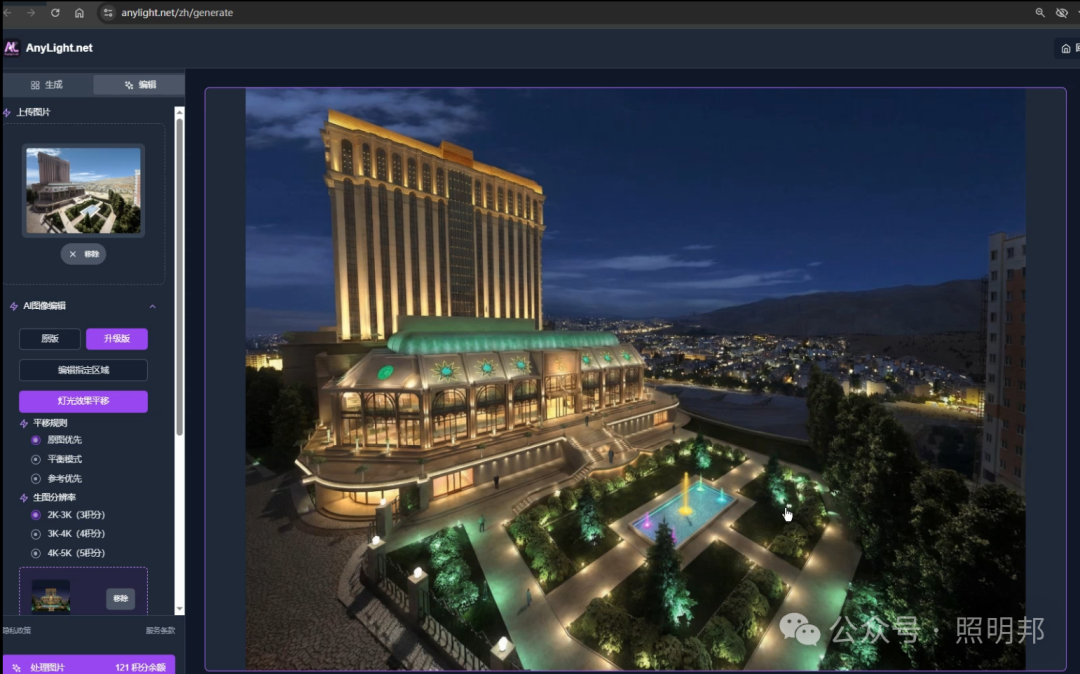
In the past, testing a design direction took a lot of time and effort. But with platforms like Anylight.net that automatically generate lighting plans, it's much easier.
It doesn't replace operations or determine project success, but it helps quickly test several lighting directions, allowing clients and designers to see differences in style faster.
Real judgment still comes back to the project itself.
4. The Lighting Industry Should Sell Results, Not Just Actions
I think this boils down to a simple principle:
The lighting industry can no longer just sell actions; it must sell results.
Installing lamps is an action.
Making renderings is an action.
Debugging control systems is an action.
Making a place more comfortable, memorable, and conducive to staying and sharing at night—that's closer to what clients want.
Not every project needs to be a large-scale night tourism product.
Some places only need basic lighting, some need safety and order, and some aren't suitable for over-packaging.
But as long as the client's goal has shifted from "lighting up the night" to "operating the night," lighting companies can't stay stuck in the old engineering delivery mindset.
First, get the lamps right; then, get the light right.
One step further: help clients think through what result this light ultimately serves.
If this question isn't clear, no matter how bright the lights are, it might just be a fleeting spectacle.
A truly valuable project is one that continues to generate impact after completion.
In the future, what will eliminate lighting companies may not be those who can't make lamps, but those who only know how to "deliver projects."
Need night lighting effect images fast?
Use Anylight to turn your daytime photos into professional night lighting visuals for architectural lighting, landscape lighting, cultural tourism lighting, and more.