

Lighting Designer Lost Job and Changed Career: AI Won't Make the Industry Disappear, But It Will Devalue Your Position
A fellow lighting designer friend of mine lost his job this year and hasn't found work since, forcing him to switch careers.
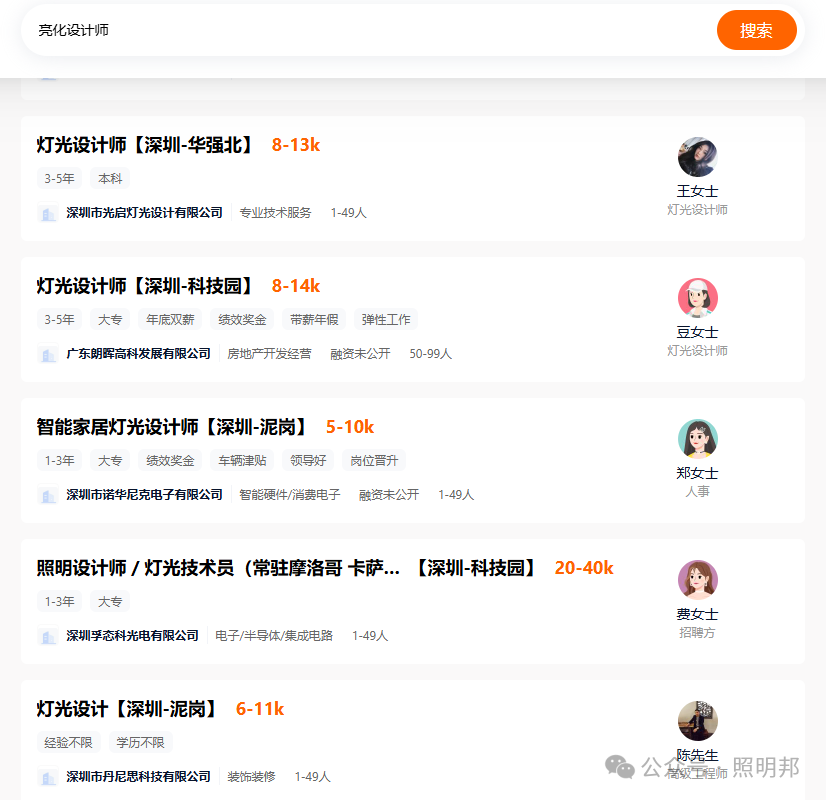
Keep in mind he had five to six years of experience in the field and used to earn over ten thousand a month. It's hard to believe he can't even find a job now.
He said that in Shenzhen, there are fewer than ten companies actually hiring for lighting design positions. Other cities are even worse.
Today I came across a viewpoint that AI won't lead to mass unemployment.
This view comes from Andrew Ng.
If you're not in the AI industry, you might not be familiar with him. He's an internationally influential AI scholar and entrepreneur, and a professor at Stanford University.
His main point is:
Every technological advancement eventually opens up new spaces and creates new jobs. History shows this.
He also used the software industry as an example, saying that although this field is deeply affected by AI, hiring still exists.
Image
To be honest, I think he's not wrong at a macro level.
Technological progress does open up new spaces and bring new ways of working.
But I feel this is not the same thing that many ordinary practitioners truly care about.
Take the lighting industry: AI won't make it disappear.
Cities still need lighting, businesses still need ambiance, cultural tourism still needs night tours, and buildings still need nighttime images. Clients still need communication, proposals, construction, implementation, and maintenance.
But just because the industry won't disappear doesn't mean your job is still valuable.
1. Demand remains, but fewer people are needed
In the past, a preliminary lighting proposal might take several designers three to five days or even a week to complete.
Now with AI, especially using professional lighting effect generation platforms like anylight.net, you can produce several lighting directions in half an hour.
For the same building, you can try warm commercial ambiance, festive atmosphere, simple contour lighting, or cultural tourism night tour directions.
These images may not be directly implementable, but they are sufficient for initial communication.
Work that previously required multiple designers can now be done by one person who understands the project, using AI tools like Anylight, in a day or two—or even half a day.
Demand remains, but AI improves efficiency, so fewer people are needed.
That's the most realistic part.
2. Repetitive rendering becomes cheap first
What AI compresses first is not complete project capability, but repetitive rendering.
Previously, a lighting project often required salespeople to communicate with clients—or even skip communication, guess the client's needs, and produce several different proposals for the client to choose from...
This work was valuable because it took a lot of time, required image editing skills, and knowledge of fixtures and lighting methods.
But as AI tools for generating lighting images become more mature, many people can use them to create "decent-looking" designs, and the price of this capability drops.
So it's not that rendering is useless; it's that the barrier to entry is lowered, and naturally the price falls.
3. The position remains, but not the headcount
The lighting designer position won't disappear immediately.
But if AI allows one designer to complete the draft work of two or three people, will companies still keep so many staff?
If salespeople can generate a few design direction images themselves, will they still wait for designers every time?
If clients can try several versions themselves, will they still pay high prices for a simple lighting image?
The position remains, but not the headcount.
Demand remains, but not everyone gets a share.
This is a different question from "Will AI make the industry disappear?"
4. What's truly valuable is professional judgment and communication skills
The lighting designer of the future is not just someone who can draw.
He must also understand the client's real intentions, communicate with salespeople, estimate costs, explain proposals, turn AI-generated images into feasible directions, and ideally soothe clients and provide emotional value.
To put it bluntly:
Make clients feel at ease, make your boss think you're reliable, make salespeople confident to present your proposals—or even negotiate yourself. Make clients see you as someone who can truly help them avoid detours and achieve results.
These rely on industry experience, which AI can hardly replace—that's what's truly valuable!
Need night lighting effect images fast?
Use Anylight to turn your daytime photos into professional night lighting visuals for architectural lighting, landscape lighting, cultural tourism lighting, and more.