

Scenic Night Lighting Fails: Why Do Ancient Towns Look Like KTVs?
A few days ago, I visited a small town in western Hunan.
During the day, the ancient street had charm—gray bricks, black tiles, small bridges over flowing water, tourists strolling slowly, and elderly people sitting in the sun.
But at night, the scene changed abruptly.
Colored light strips lined the eaves, walls glowed red and purple, trees were draped with flashing string lights, and blue beams shot out from under the bridge arches.
For a moment, I felt like I had walked into a budget KTV.
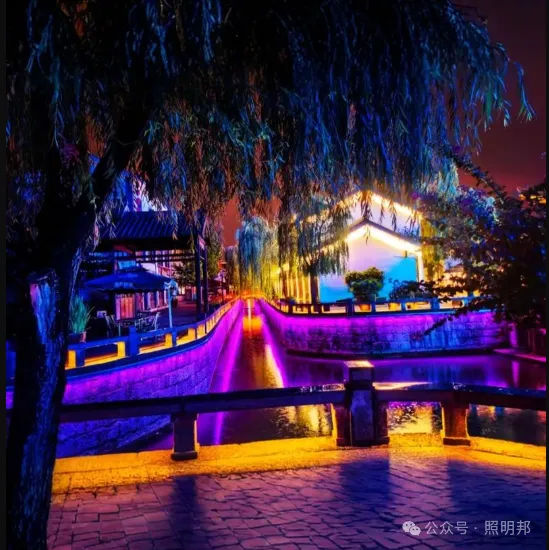
Many people share this feeling:
Some scenic areas aren't underlit—they're so bright you want to escape.
What's truly jarring isn't just the lights, but the "overkill" that ignores context, character, and aesthetics.
Night lighting fails often aren't about insufficient brightness
Many projects get the direction wrong from the start.
They aren't creating an atmosphere.
They're proving they "did the lighting."
Walls must be lit. Trees must be lit. Bridges must be lit. Water surfaces must be lit. Roofs can't be left alone—better add a chasing light strip.
It looks lively.
But standing there, you only feel noise.
Not sound noise.
Light noise.
High-end night lighting doesn't light everything.
It lights what should be lit and leaves the rest in quiet darkness.
Layered light makes people comfortable.
Spaces with breathing room give night its flavor.
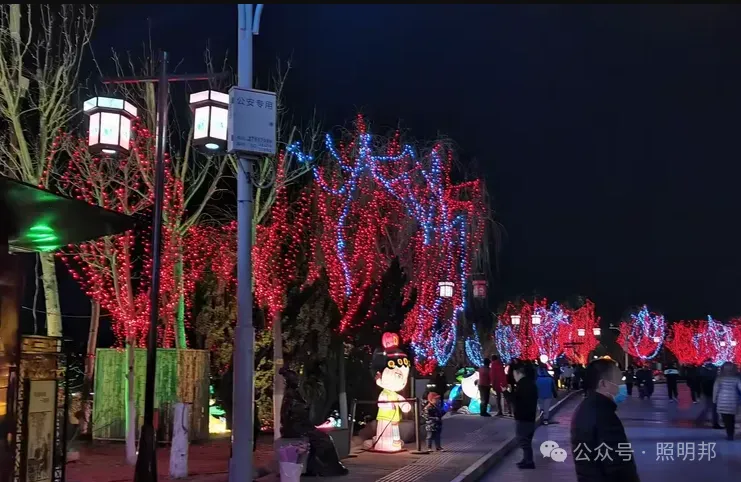
Cheapness starts with "fill every corner with light"
Some ancient buildings look dignified during the day.
At night, red, purple, and blue washes make them look like they've changed skin.
The sense of age disappears.
Material textures vanish.
The building's own character is lost.
Complaints about "looking like KTV" aren't just jokes.
They express a shared feeling:
This place has lost its identity at night.
Ancient towns don't look like ancient towns.
Commercial streets don't look like commercial streets.
Parks don't look like parks.
They all become the same night lighting template:
Colorful, flashing, full coverage, overdone.
Striking at first glance, but tiring after a while.
Many night lighting failures aren't due to lack of budget.
On the contrary, a lot of money was spent.
More fixtures, more systems, more controls, flashy renderings.
But the result isn't pleasing to the eye.
That's the problem.
Many clients still judge night lighting by a simple logic:
Brighter is better; more motion means more tech; more flash means more shareable.
The short-video era has pushed this aesthetic further.
Grab attention in three seconds, deliver a punch in five.
Ideally, the moment the camera opens, the screen explodes with color.
But a city isn't a live stream, and a scenic area isn't a stage backdrop.
A place shouldn't sacrifice its entire night for a few seconds of viral content.
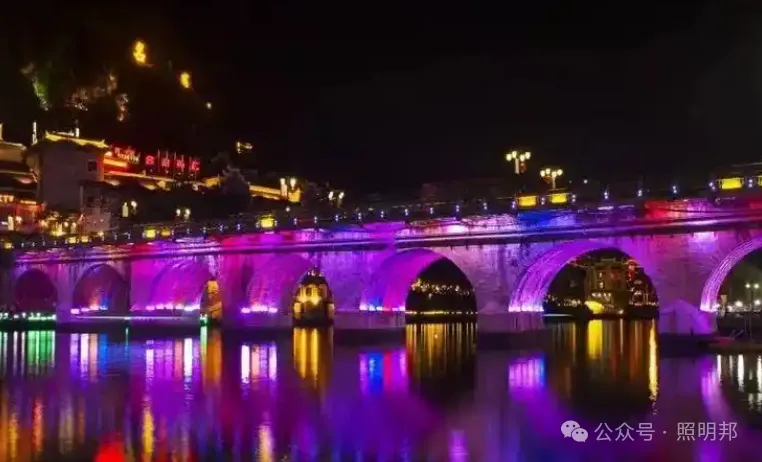
The worst part: aesthetics held hostage by traffic
Many projects know their lighting is tacky.
But they fear "not being lively enough."
Fear of darkness, emptiness, quietness.
Fear that leaders will think it's ineffective, that tourists won't get explosive photos.
So lighting becomes an expression of anxiety.
Where commerce is weak, make the lights flashier.
Where content is lacking, put on a light show.
Where space is ordinary, cover it with color.
But lighting isn't a universal band-aid.
It can amplify beauty, but also amplify emptiness.
If a place has no inherent content, the harder the lighting tries, the more it exposes the problem.
What's truly painful:
We wanted to use lighting to enhance a city's character.
But often, we just illuminate the city's anxiety more brightly.
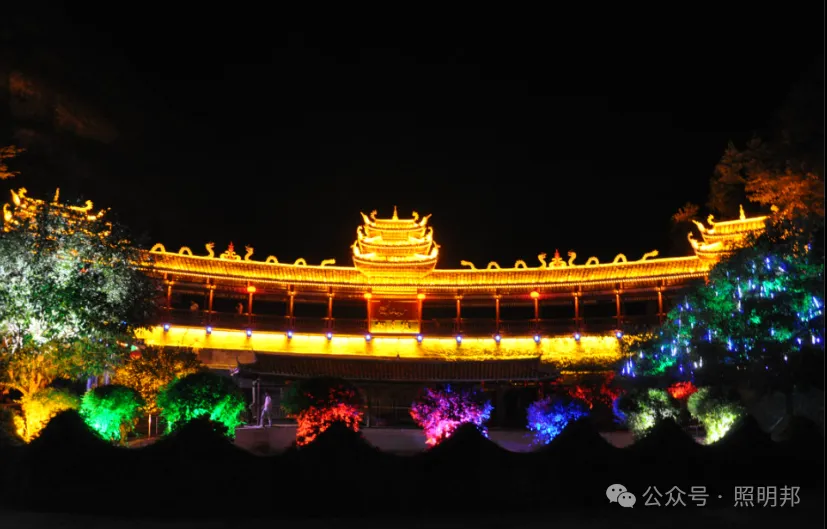
Good night lighting makes people want to stay
Truly high-end night lighting doesn't shout.
It doesn't rush to say "I'm expensive."
Or "I'm an influencer."
It just makes you want to slow down when you get there.
Sit for a while.
Take a photo that isn't harsh.
Remember what this place looks like at night.
A commercial street needs a consumption atmosphere.
A park needs comfort and safety.
An ancient town needs a sense of time.
A city needs order and breathing room at night.
Not every place needs to be dazzling.
Not every night scene relies on color.
Not every lighting project must become a visual spectacle.
A city's night reveals its true aesthetic
During the day, architecture, streets, trees, people, and natural light hold things together.
At night, only how you use light speaks.
Some places speak gently, some loudly, some like a slow song, some like a broken speaker at a square dance.
Once light becomes excessive, it's no longer beautification—it's disturbance.
Disturbing buildings, streets, people's eyes, and a place's original character.
Many cities have distinct personalities during the day, but at night, they increasingly look like clones of the same "viral night scene" template.
That's the biggest loss.
Truly high-end night lighting never aims to brighten the city.
It gives light a reason and darkness dignity.
Lighting shouldn't just be a traffic tool; it's more like a city's nighttime expression.
A city's night hides its true aesthetic.
Need night lighting effect images fast?
Use Anylight to turn your daytime photos into professional night lighting visuals for architectural lighting, landscape lighting, cultural tourism lighting, and more.