

AI Can Generate Lighting Renderings, So Why Do Clients Still Pay a Premium for Design?
A couple of days ago, a client asked me to create a few lighting renderings—fairly simple ones. I quoted a price that was relatively high compared to peers, but to my surprise, the client paid the full amount immediately after receiving the quote.
I started thinking: I've been promoting that lighting renderings can be generated directly in Anylight, so why would a client still be willing to pay a "premium" for design?
After some reflection, I realized this shouldn't be viewed solely from the perspective of an industry designer familiar with AI. Instead, looking at it from the broader industry—or even from the client's perspective outside the industry—three main reasons become clear:
1. Clients Pay for "Professionalism and Certainty"
When a client hires you for lighting design, they're often not just buying a rendering.
They're buying time: fewer detours, more saved time and energy.
It's like food delivery. I know I could save money by hunting for platform coupons, but wasting that much time and effort for a small saving isn't worth it.
They're buying peace of mind: professional designers are more reliable.
Perhaps this client knows we developed Anylight, but if asked to generate renderings themselves, they might not know how to write prompts.
Even though we've pre-written many prompts, users may not understand the difference between common lighting terms like LED linear lights, wall washers, or floodlights.
So what the client pays for isn't just an effect image—it's "having a professional finalize the lighting effect for my project."
That certainty has value.

2. Clients Who Can Use AI to Generate Images Don't Lack Images—They Lack Screening and Judgment Ability
Even if a client can generate AI lighting renderings, the same building can produce warm commercial atmospheres, cool tech styles, festive moods, simple contour lighting, or cultural tourism nightscapes.
More images and more choices don't necessarily make decisions easier.
The client might look at ten images, find each interesting, but not know which suits them best.
Some images are beautiful but may have incorrect lighting logic.
Some are stunning but could be very costly in reality.
Some are great for promotion but not suitable for further development.
At this point, what the client lacks isn't more renderings—it's someone to help them filter and judge.
These judgments still come from industry experience.
So AI makes "generating images" cheaper, but it makes "judging which lighting solution works" more important.
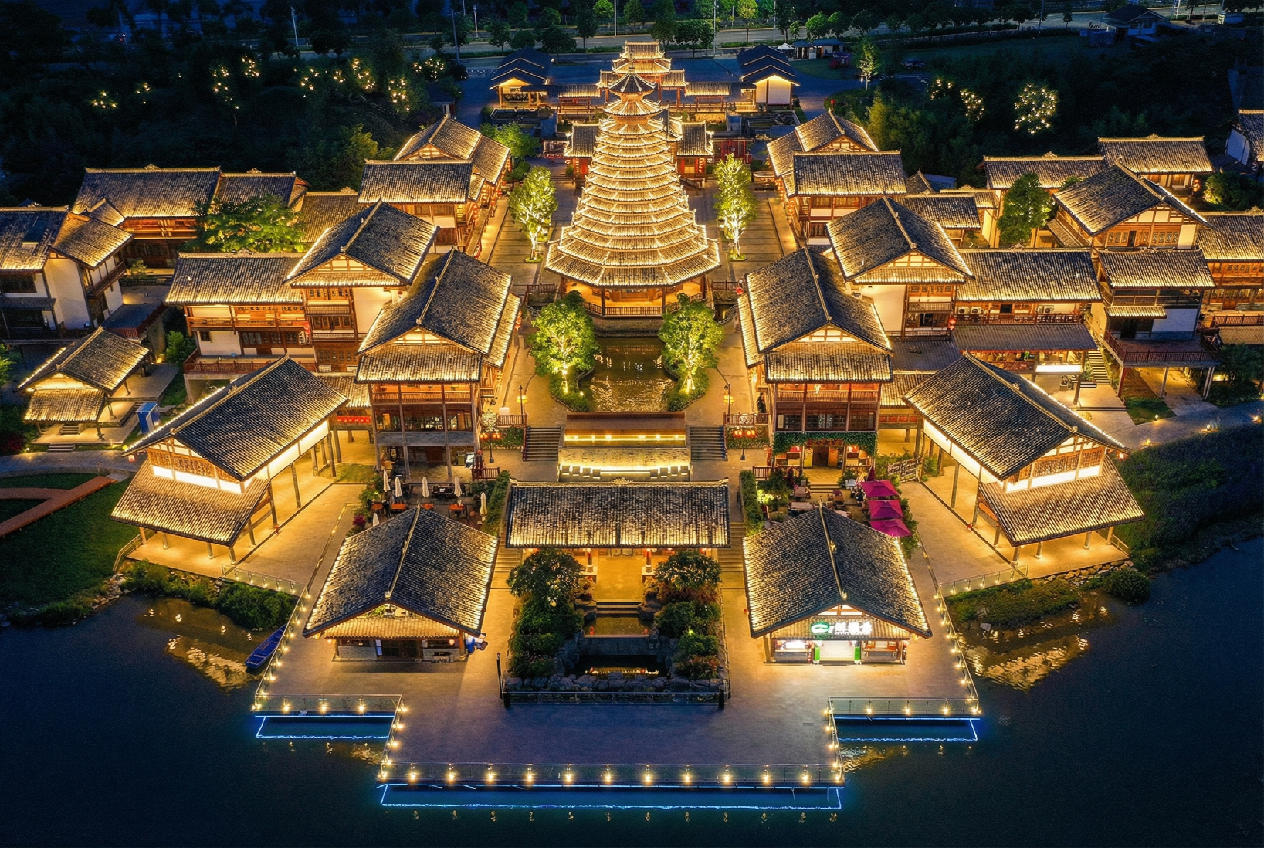
3. Information Gaps Still Exist Between Different Groups
As lighting designers, we use Anylight.net daily to generate images, so we think AI-generated lighting renderings are normal.
But many clients outside the industry don't know about it.
Even many industry designers or engineering company salespeople may not know about platforms like Anylight.net specifically for lighting renderings.
This is the information gap between different groups.
Those who know how to use it see it as just a tool.
Those who don't know don't even know where to start.
It's like some resources, templates, or tool tutorials that are cheaper or even free online.
Yet people still pay for them.
Not because they're foolish, but because they don't have time to search or the ability to judge what suits them.
For them, saving time, reducing hassle, and directly getting a seemingly reliable result has inherent value.
The same goes for lighting design.
Clients may not know AI can generate lighting renderings.
Even if they know, they may not know how to generate them.
Even if they generate them, they may not know which image suits their project.
So AI hasn't immediately eliminated the information gap.
It has simply released the tool, and those who can use the tool, filter results, and explain them clearly still hold value.
---
So back to the initial question:
AI can generate lighting renderings, so why do clients still pay a premium for design?
My understanding is:
- Clients pay for certainty.
- What clients truly lack is screening ability.
- Information gaps still exist between different platforms and groups.
- AI can lower rendering costs, but it hasn't lowered judgment costs.
If you treat AI merely as an "automatic rendering tool," it can easily become devalued.
But if you use it to quickly generate design directions, then help clients filter, judge, and explain, it actually amplifies your professional value.
Need night lighting effect images fast?
Use Anylight to turn your daytime photos into professional night lighting visuals for architectural lighting, landscape lighting, cultural tourism lighting, and more.